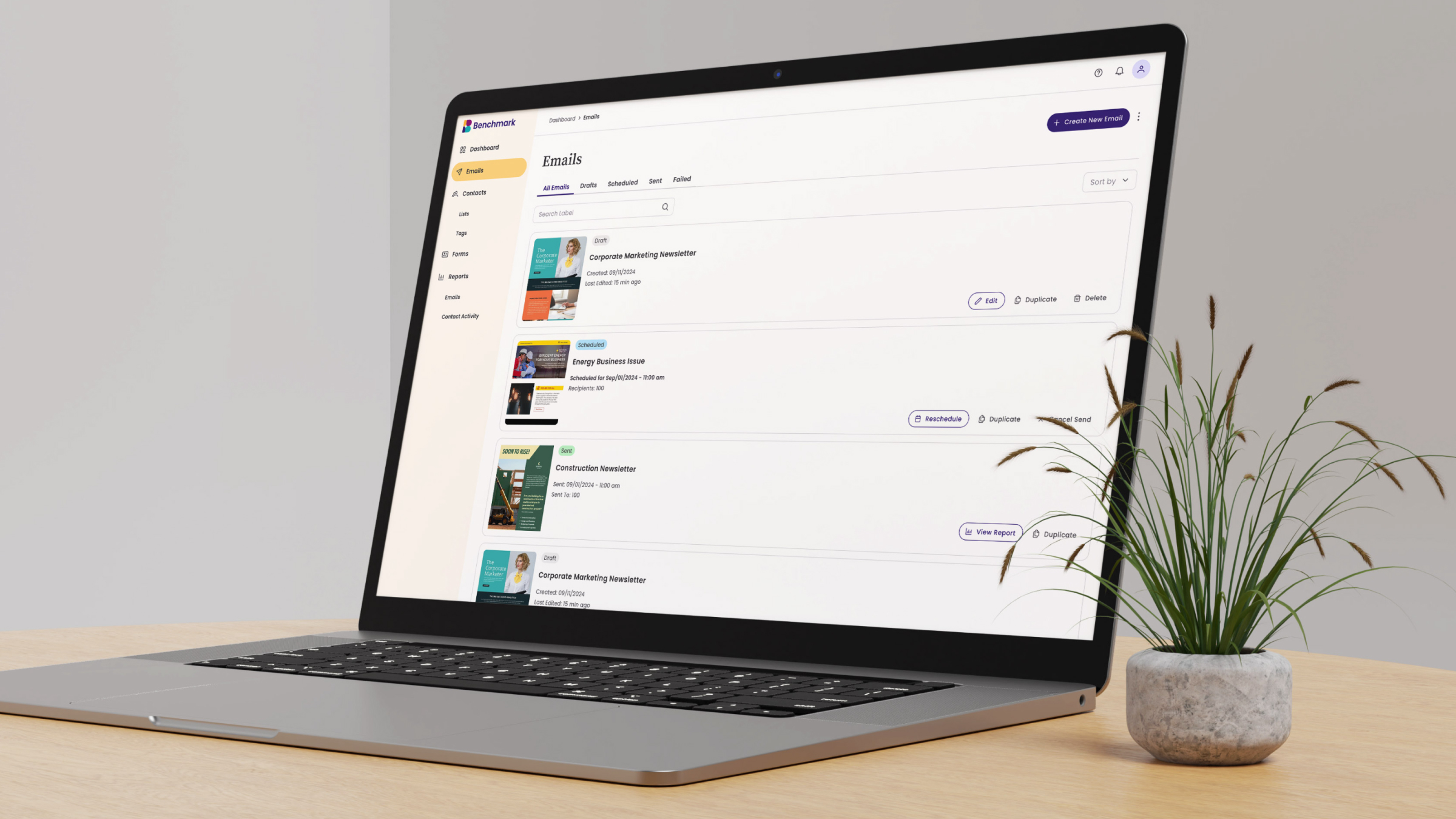
Benchmark: Owning Product Design End-to-End
Built and shipped a full SaaS product while establishing design practice, research process, and cross-functional operating model from scratch.
Benchmark is an email marketing platform founded in 2004, serving small and mid-sized businesses globally. We launched a fully reimagined product in October 2025, built on modern architecture and a contact-centric model.
Read Benchmark: Designing the Practice for the story on design system, accessibility, documentation hub and AI tooling.
No design foundation. Full Ownership.
I joined Benchmark in October 2023 as the sole designer on a brand new platform. Development already had a three-month head start, and there was no PM, no research practice, no design system.
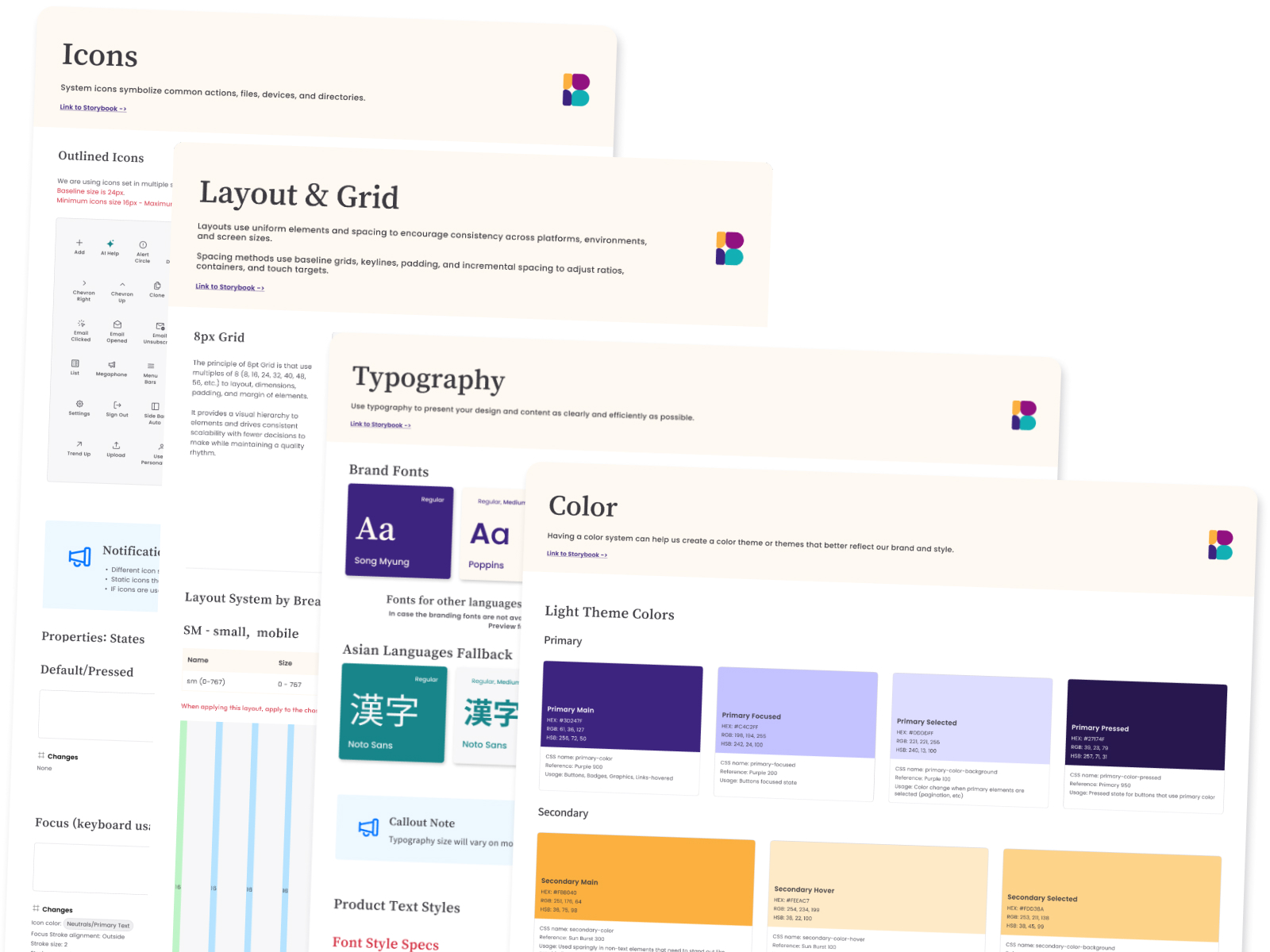
The first decision was to not design a single screen. Without shared infrastructure, every future change would cost more. Instead, I built the design system foundation first: a 300+ component system that ultimately supported every flow shipped.
Over the next year, the product expanded 20+ user flows, spanning the entire customer lifecycle.
The challenge was never just designing a product. It was building the conditions for design to work while simultaneously shipping it.
Influence without formal authority.
With no PM layer, I set direction, wrote requirements, identified problems before they were assigned, and coordinated the work needed to move the product forward.
Early on, engineering was moving ahead without design input. I raised the issue directly with the CPO, who partnered with the VP of Engineering to improve the collaboration model. From that point forward, design became involved much earlier in product planning.
I also introduced AI-assisted workflows to move faster without sacrificing quality. After more than a year of operating solo work, I onboarded a second designer into the systems, processes, and standards I had established so they could operate independently.
Design driving development, not following it.
By the time Benchmark launched in October 2025, the team had shifted from reactive execution to a more collaborative, design-led approach. Getting there meant two years of identifying what needed to change, making the case for it, and helping design and engineering work together more effectively.
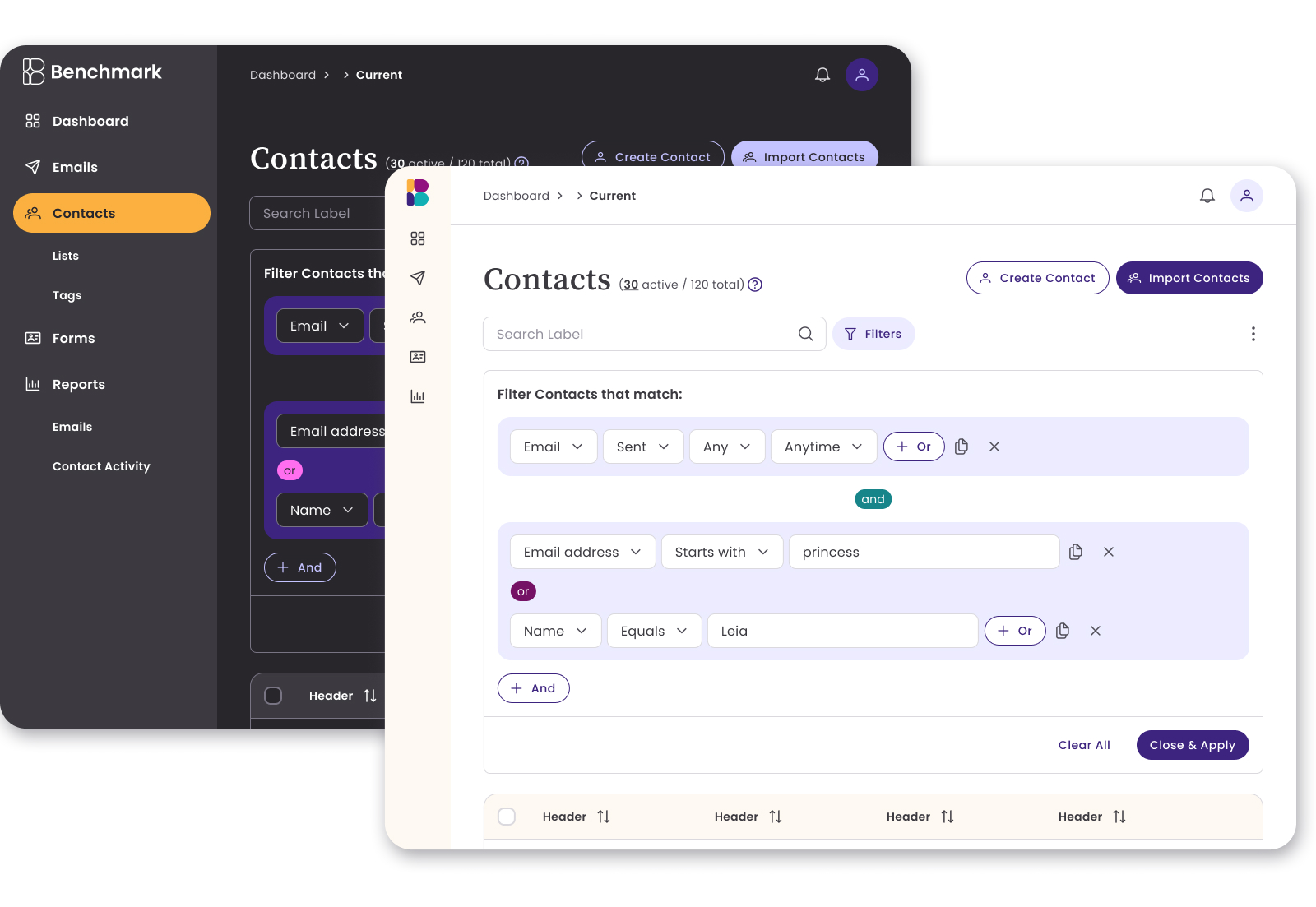
Filters were one of the product's most complex design challenges. The logic was technically demanding, and early concepts required multiple rounds of research and iteration to balance what the backend could support with what users could easily understand. The process reshaped both the UI and the underlying logic, resulting in a significantly different solution from where it started.
No practice. No templates. Built from scratch.
There was no formal research practice when I joined and no consistent way to connect findings to decisions. I introduced more structure through documentation, repeatable methods, and clearer links between research insights and product decisions.
Before designing solutions, I ran discovery with real users through moderated interviews, unmoderated usability tests, surveys, heuristic evaluations, and WCAG audits.
All 8 self-initiated studies resulted in product changes, influencing contact management, feature validation, email builder evaluation, and accessibility improvements.
Validating a fundamental shift before it shipped.
The new Benchmark is contact-centric. Every contact exists once, with a unified profile, and can belong to multiple lists without duplication. For users who had managed overlapping lists for years, this was a fundamental shift.
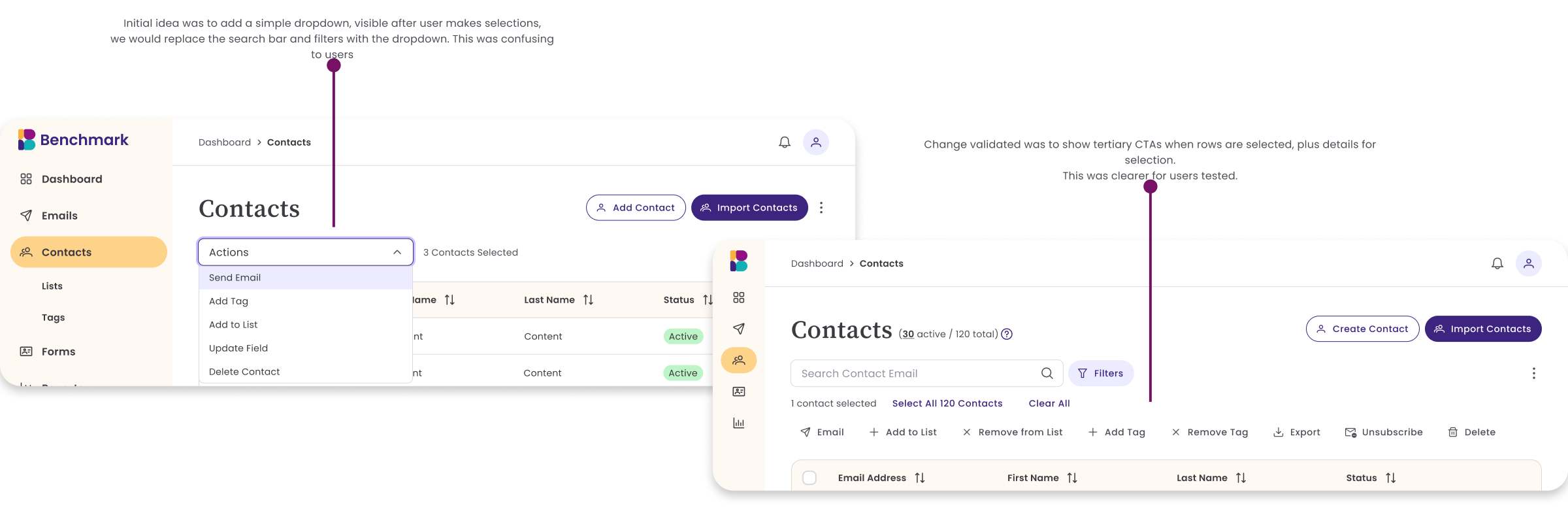
Before the model shipped, I validated it through a three-part discovery study combining interviews, usability testing, and a filter preference test. Seven sessions, 45-50 minutes each, with Benchmark users who had been on the legacy platform for up to 15 years.
During the bulk actions task, the first two participants could not find the actions button. I redesigned the placement mid-study, validated it with the remaining participants, and the change held.
A checklist that shows, not a form that blocks.
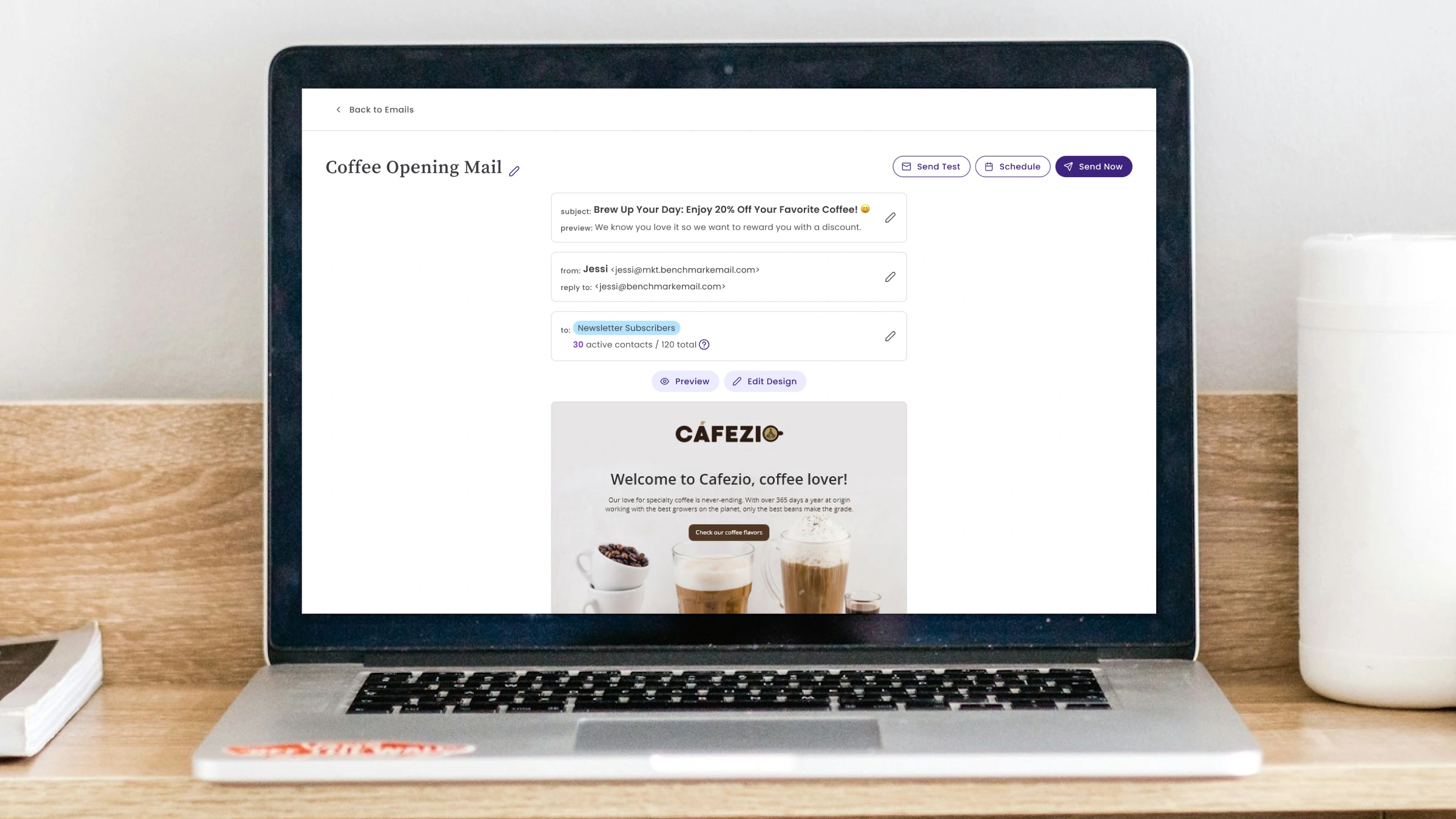
Sending an email campaign is the core action in any email marketing platform. I designed the end-to-end campaign flow, from template selection through sending, scheduling, and testing.
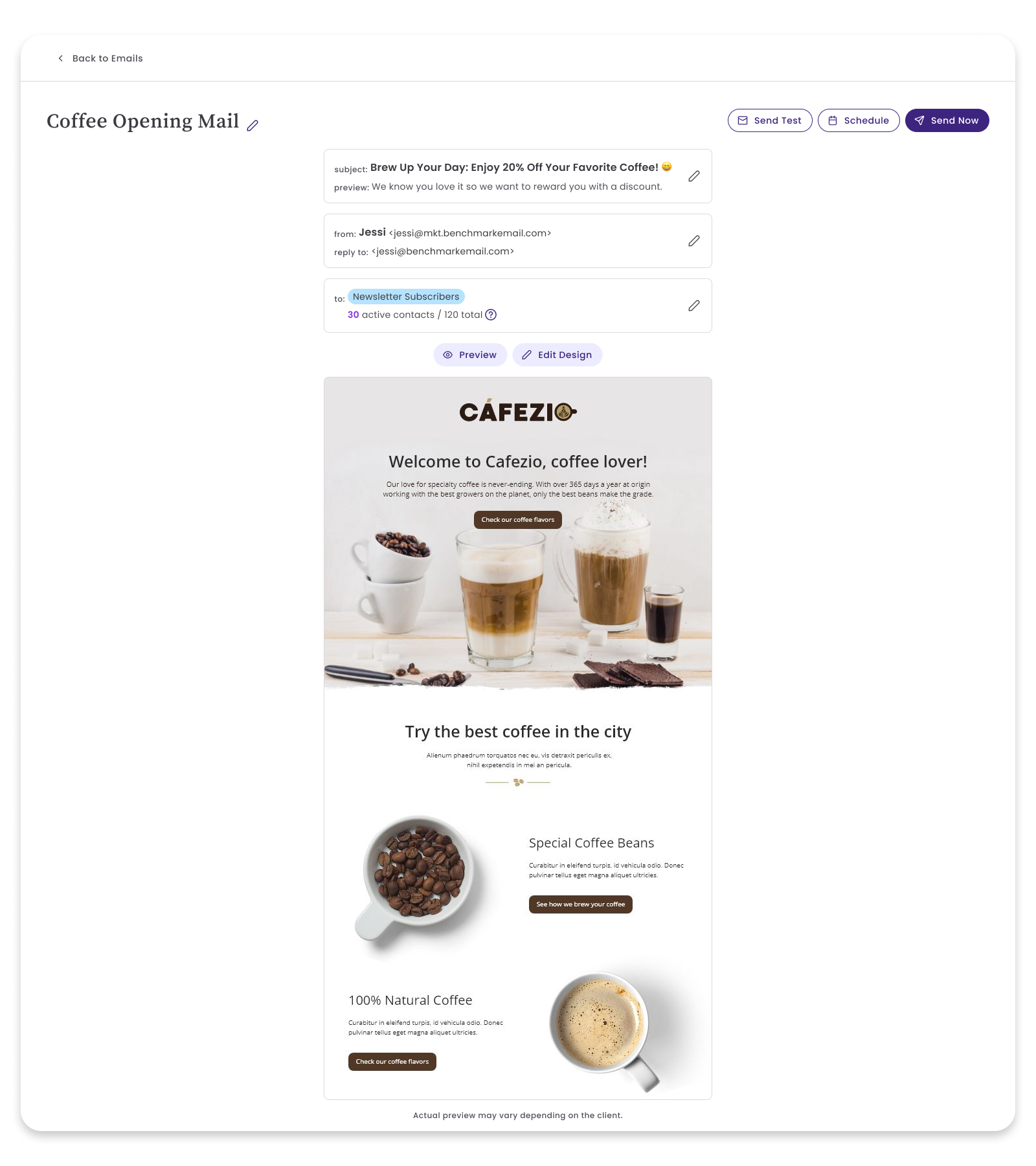
Leadership envisioned a single-form approach, but forms fail when required information is missing. I reframed it as a preview-style checklist, allowing users to complete required details while seeing exactly how their email would appear in the inbox.
Behavioral data shows the primary friction point is the schedule time picker modal, not the checklist itself.
Every plan state. One-month timelines. Incomplete specs.
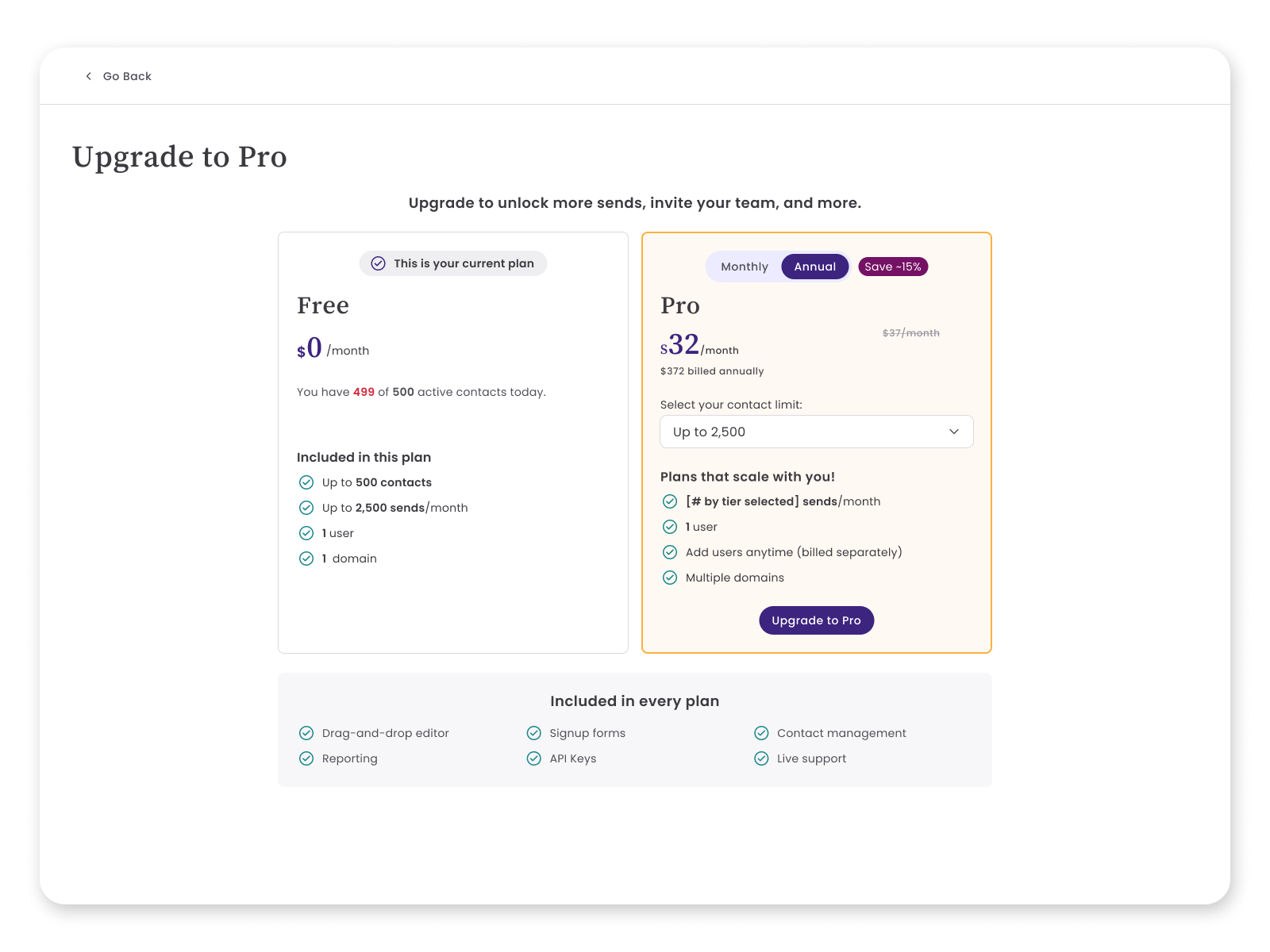
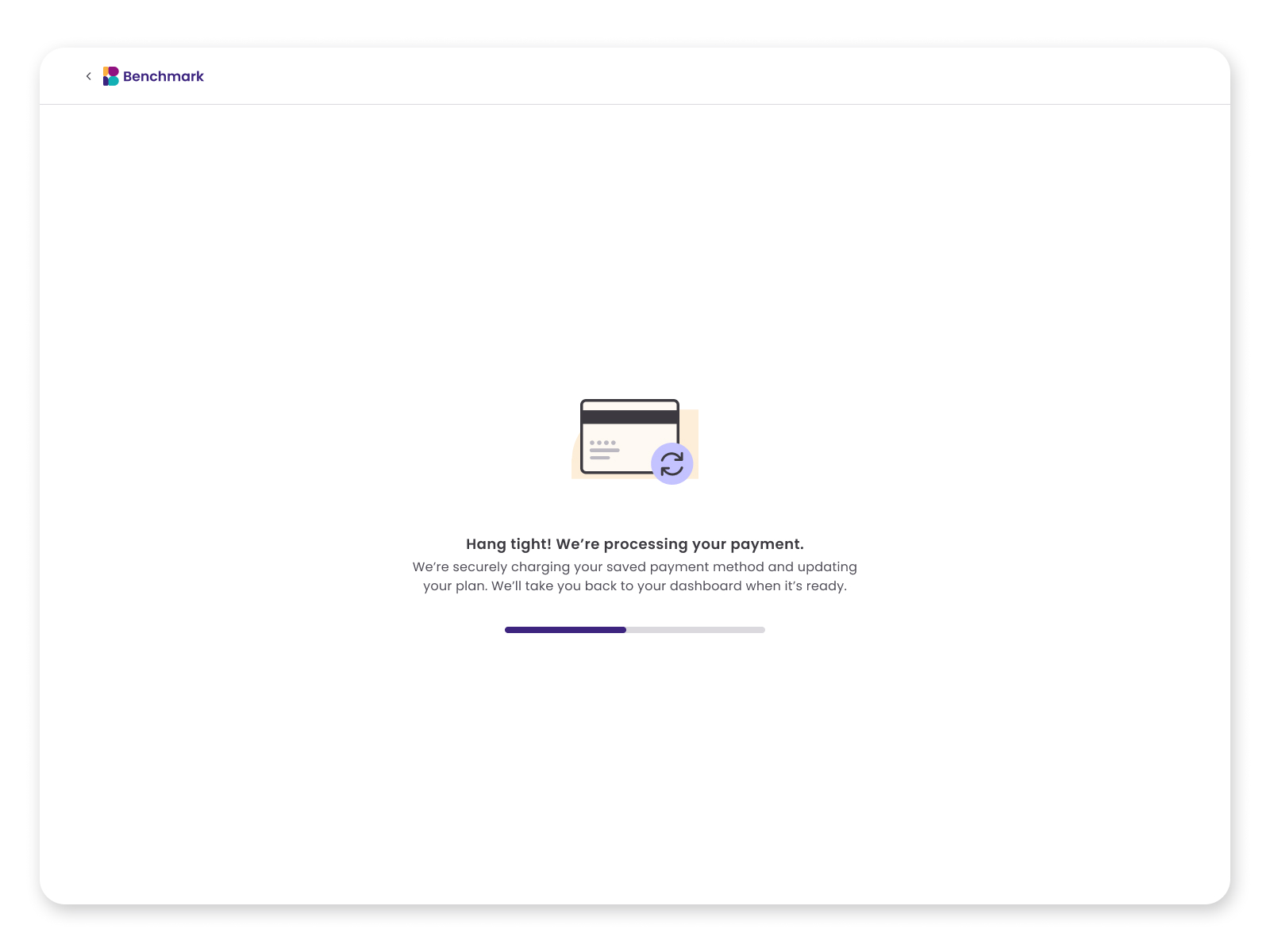
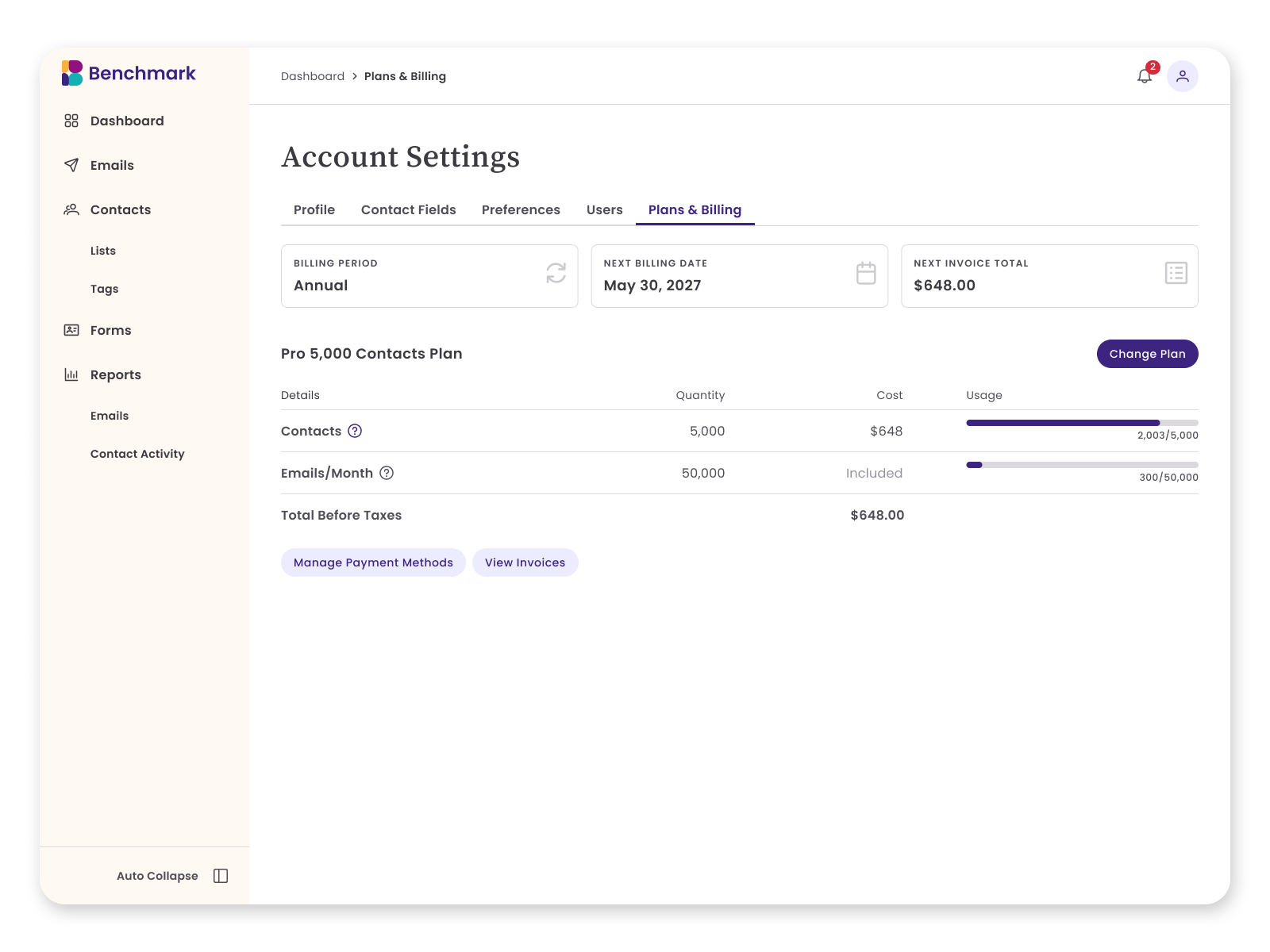
Billing is where product complexity and business decisions collide. I designed Benchmark's complete billing system, covering every plan state across free, paid, and multi-user tiers, including upgrades, downgrades, payment failures, and account management.
Every flow was designed within one-month timelines while backend specifications and pricing decisions were still evolving. Edge cases discovered post-launch were resolved without disrupting the live product. Annual billing was later added as a new flow, building on established system patterns rather than starting from scratch.
Research before engineering commits.
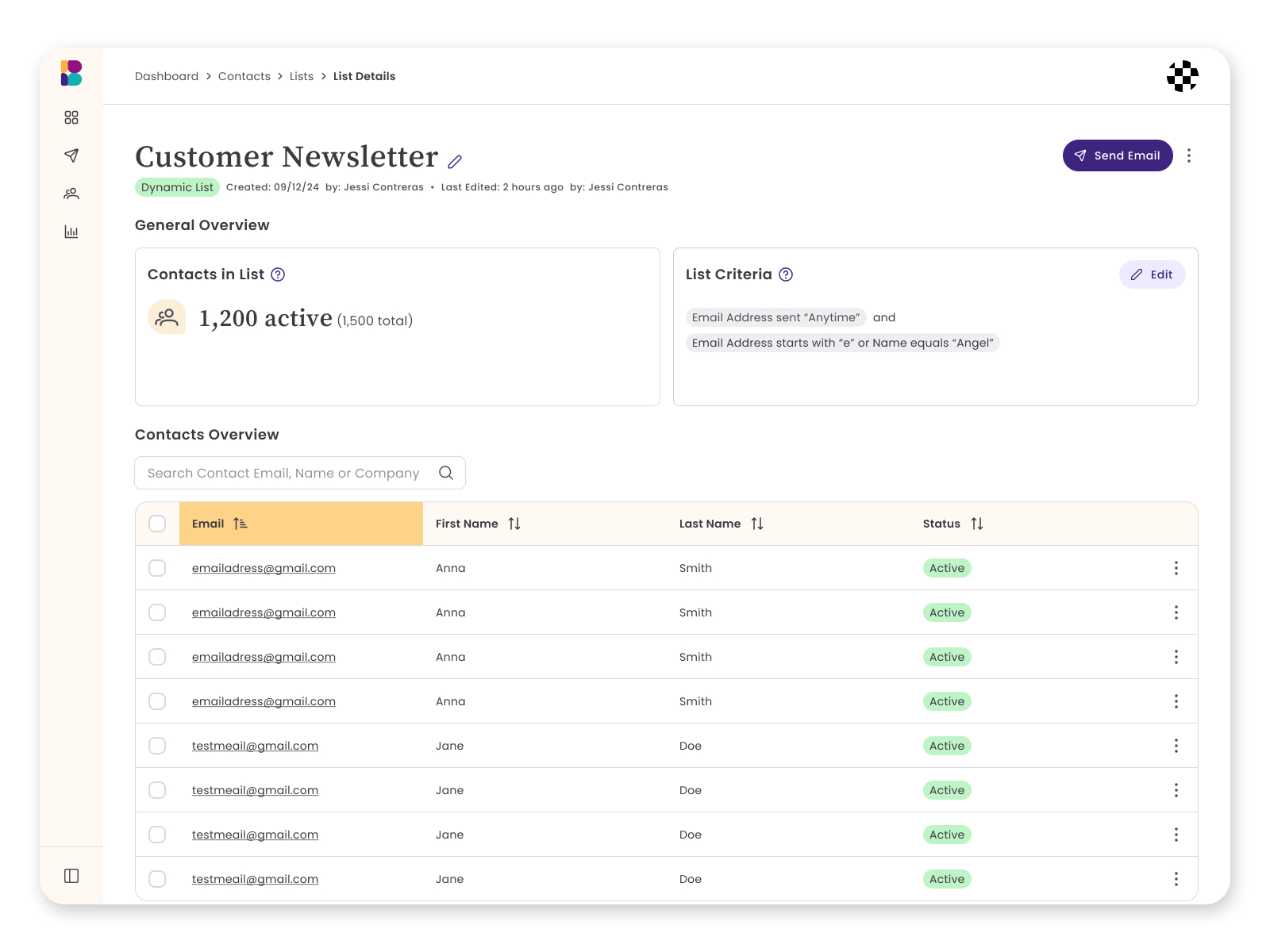
Benchmark supports two list types: Static Lists for manually curated audiences and Dynamic Lists that update automatically based on contact criteria.
Before committing engineering to both, I validated the need through a two-study research sequence. The business wanted Dynamic Lists, but I ran the research to confirm users did too, independent of internal assumptions. In usability testing, 15 of 16 participants completed all tasks.
Making change feel familiar.
Migrating users from a legacy platform is one of the highest-stakes challenges in a product transition. Benchmark Classic users have up to 15 years of data, established workflows, and no immediate reason to move. But Classic will sunset, making migration critical for the business.
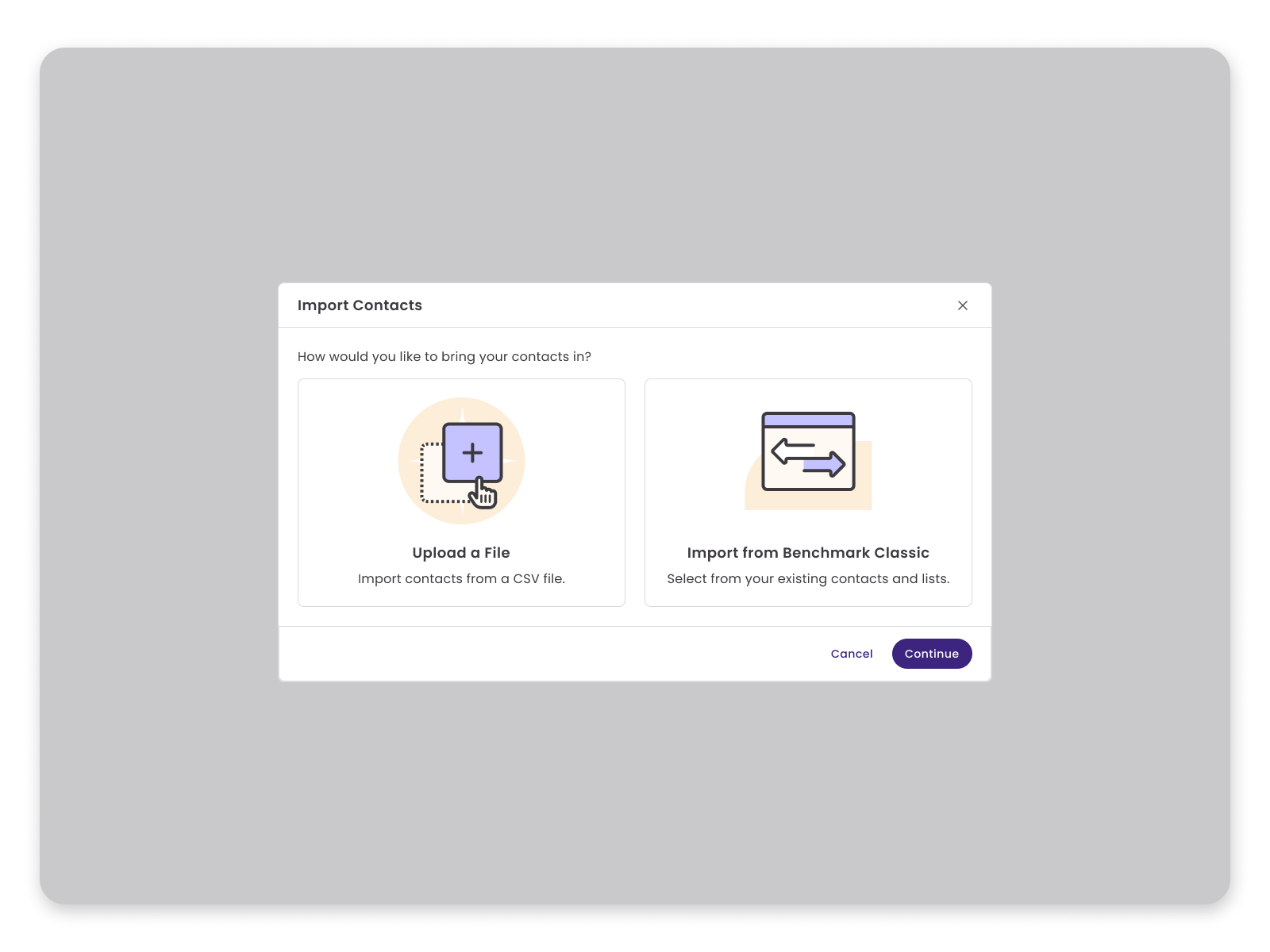
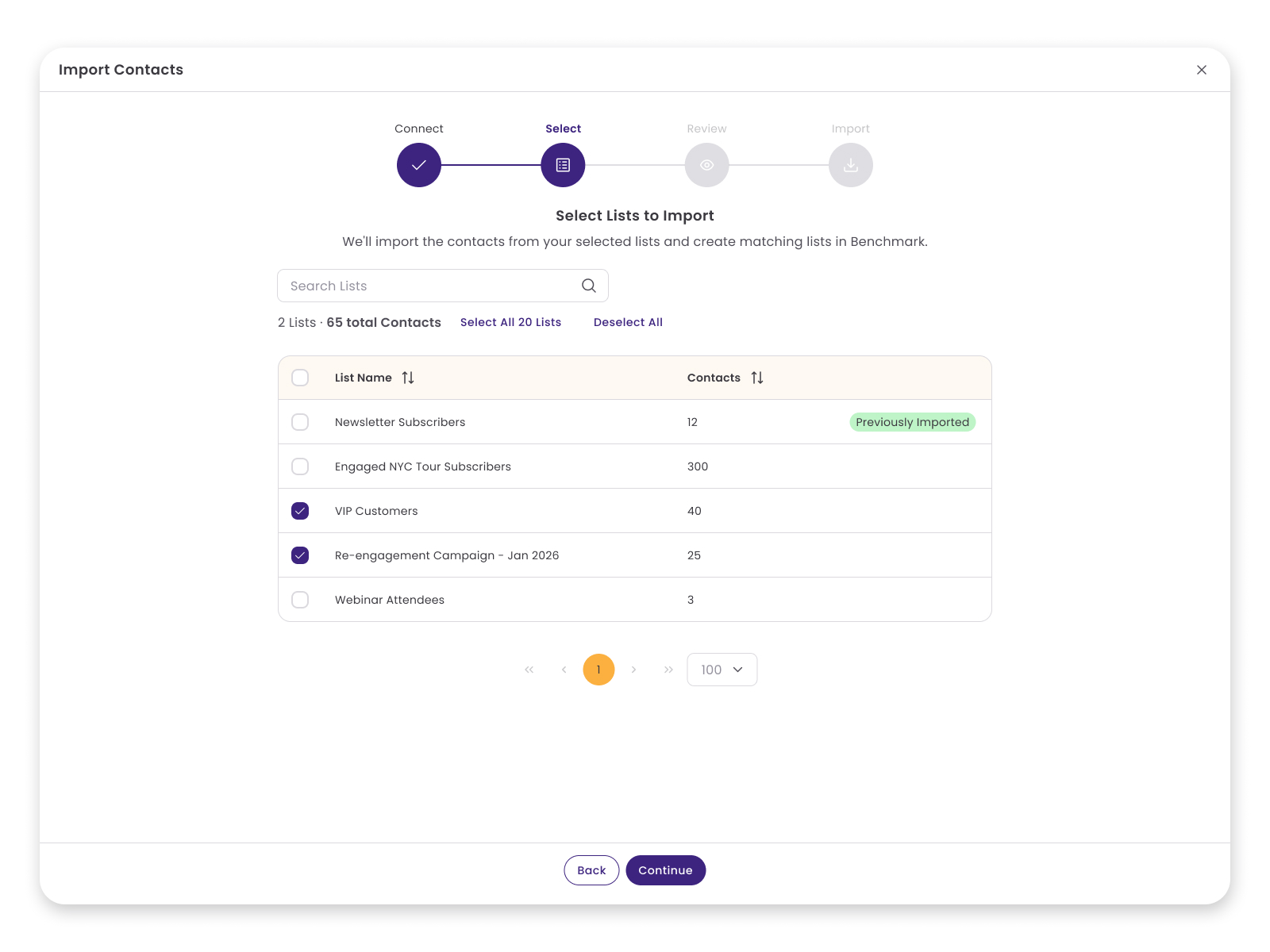
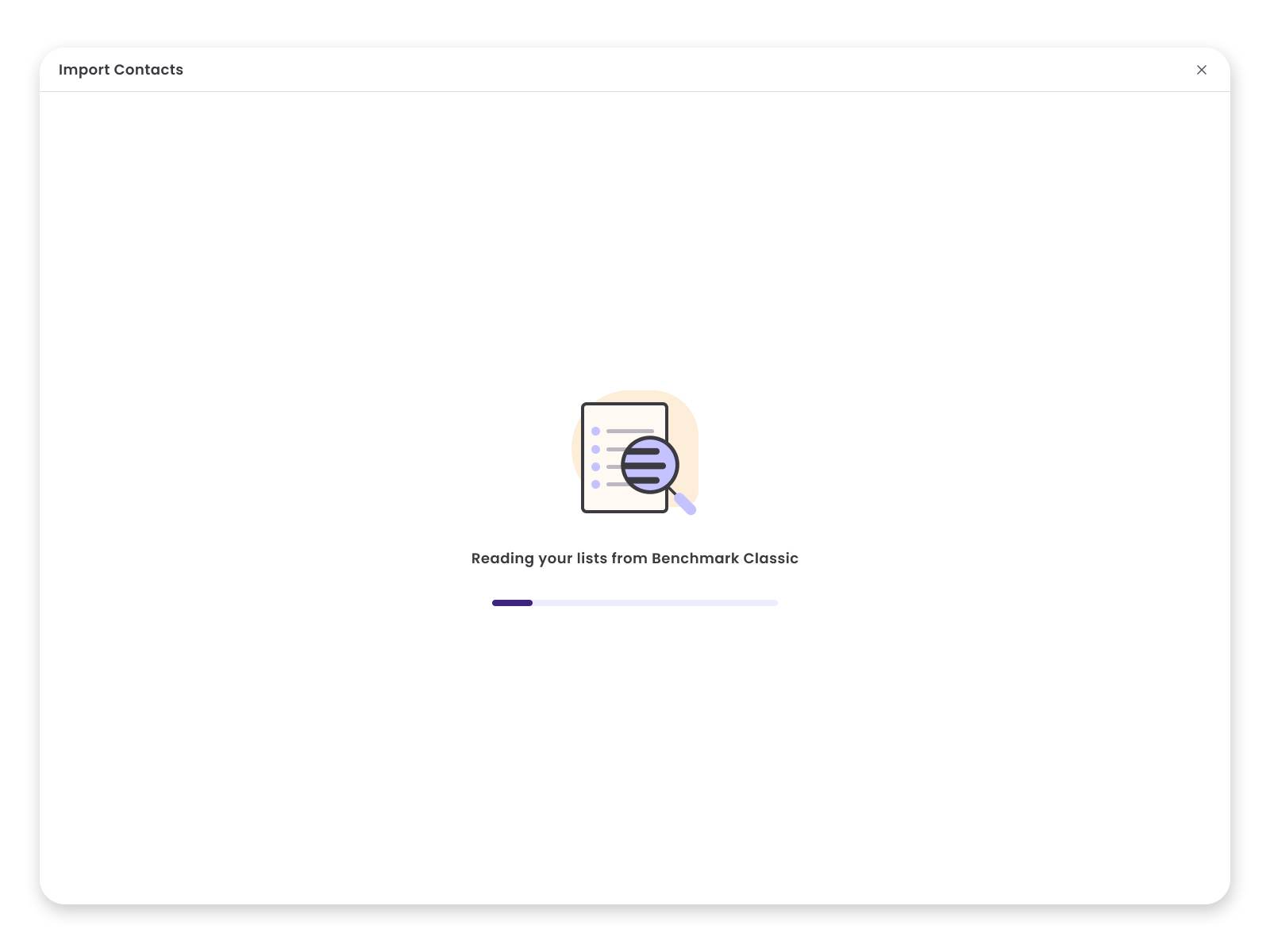
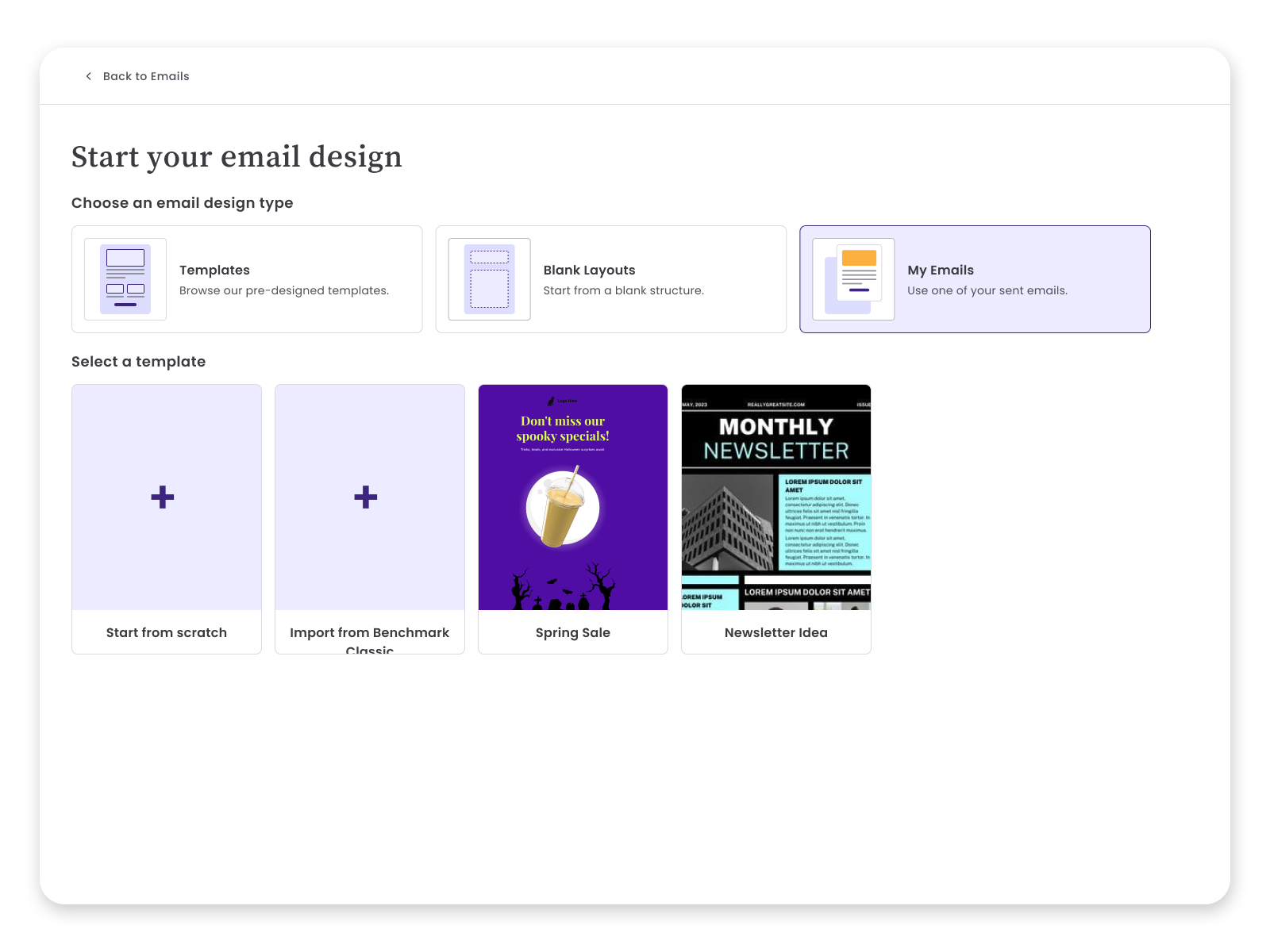
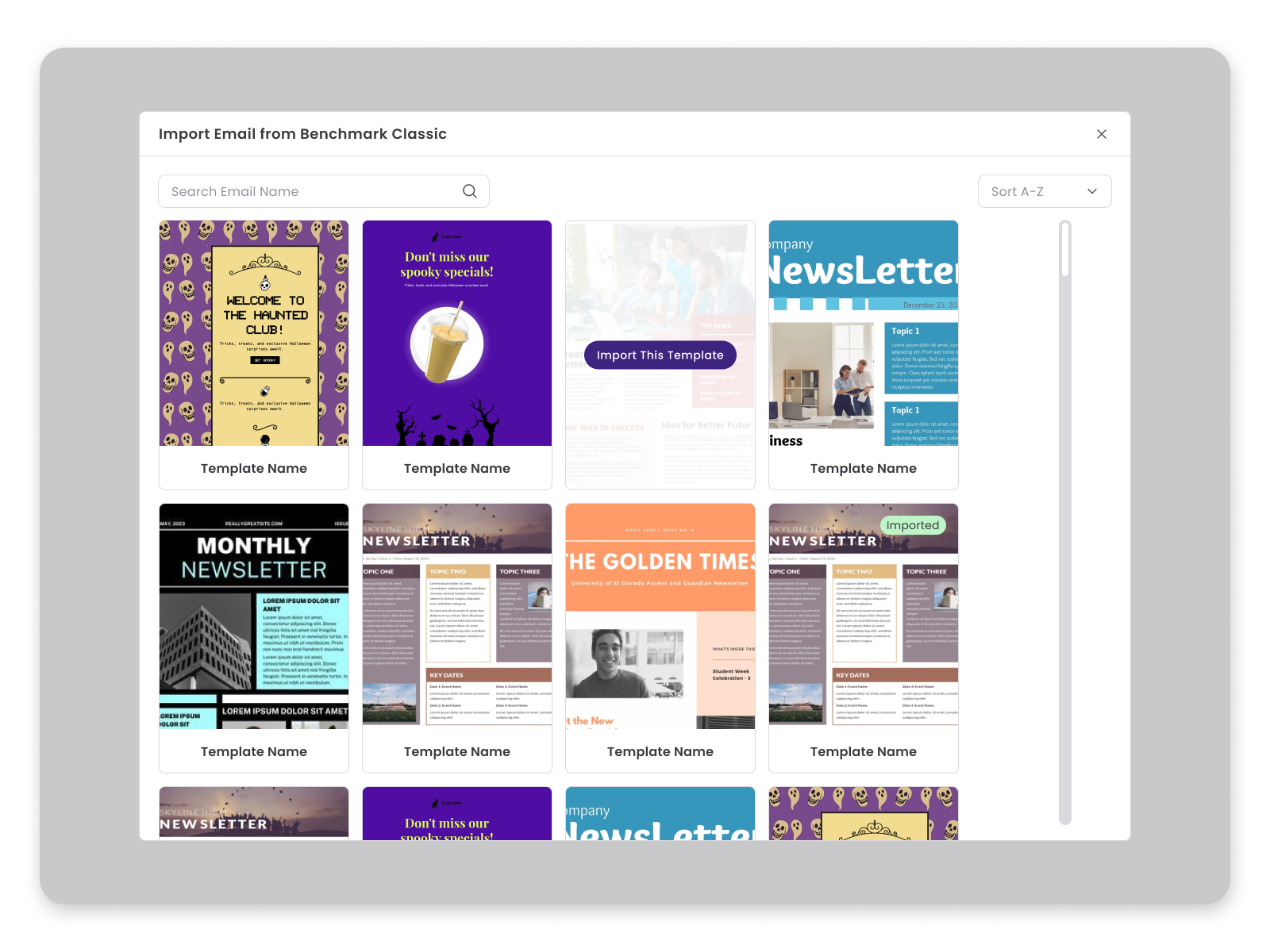
I designed the contact and template migration flows that allow users to bring existing data into the new platform. Contact migration deduplicates overlapping lists into unified profiles and maps custom fields through a guided four-step wizard. Template migration brings existing email designs into the new builder, preserving years of content without requiring users to start from scratch.
The goal throughout: make the transition feel like a continuation, not a disruption.
- Sole designer across a full SaaS platform, spanning 20+ user flows
- Product launched October 2025, and is actively serving customers
- Two migration epics delivered solo across six weeks
- All 8 self-initiated studies resulted in product changes
- 4 UX fixes shipped pre-MVP from a single discovery study
- 86% of research participants validated Dynamic Lists before engineering committed
- Structural process change: Helped establish a design-first collaboration model across product and engineering.
- Second designer onboarded and operating independently after one year of solo ownership
- AI-assisted workflows adopted across the team, reducing ticket writing from hours to minutes per cycle
Benchmark's new platform is live and serving real customers, including enterprise brands such as FedEx, Panasonic, and Samsung. Built from the ground up to replace a decade-old legacy product, it continues to evolve as Benchmark Classic users migrate to the new experience.